Welcome to Ordos -Where the Grassland Meets the Future - and Asia's Brightest Young Talents Are About to Take Center Stage
Ordos, China — There is a moment, somewhere between the airport shuttle and the first glimpse of Kangbashi's skyline rising out of the grassland, when this city stops visitors in their tracks. One minute the window is full of open plateau and pale earth stretching toward the horizon; the next, a cluster of buildings unlike anything else appears — a theatre shaped like a Mongolian felt cap, a library stacked like books reaching for the sky, a museum that looks like a boulder dropped from the heavens. For the many delegations, officials, and media now arriving ahead of competition, it takes barely a day in Ordos to understand why this place is often described as magical.
The Asian Athletics Association has followed a familiar rhythm in recent years, bringing its championships to cities across the continent that reveal themselves gradually, layer by layer. Ordos does the opposite. It introduces itself immediately, and it keeps surprising newcomers the longer they stay.
A Name That Means "Many Palaces"
The word Ordos comes from Mongolian and translates roughly to "many palaces" — a nod to the tents and encampments of Genghis Khan's imperial guard, who once used this land as their base. It's a fitting detail to learn on a first evening here, because it still feels true today. The palaces are now made of glass and steel instead of felt and silk, but the sense of grandeur hasn't gone anywhere.
Ordos sits on the Ordos Plateau in the southwestern part of Inner Mongolia, cradled on three sides by the great bend of the Yellow River and facing the ancient Great Wall to the south. Grassland, desert, and city all collide here in a way that still feels a little unreal, however many times you walk through it.

A City That Feels Like Art
Most visitors' first stop is Kangbashi, the district that has become the beating heart of modern Ordos and the seat of city government. In 2012, Kangbashi became the first urban landscape in China to be awarded 4A-level scenic status — an unusual honor for a district rather than a single monument, and one that tells you everything about the ambition poured into its design.
Wander its wide, art-filled boulevards and the buildings themselves start to feel like sculpture: the Ordos Museum, shaped like a great dark boulder rising from the plain; the Ordos Library, designed as three books stacked vertically; the Grand Theatre, echoing the round silhouette of a traditional Mongolian cap. At the center of it all is a vast flower square, radiating bands of color around the four landmark buildings, usually quiet enough to feel like a private garden.
As evening falls, the Wulanmulun River comes alive with a laser and music fountain show — among the largest of its kind in the world — turning the riverside into a wash of color and light that draws locals and visitors alike out for an evening stroll.
Desert, Grassland, and the Echoes of an Empire
Step outside the city and Ordos changes character completely. To the west lies the Kubuqi Desert, the seventh-largest in China, where rolling dunes rise 10 to 60 meters and camel caravans still cross the sand as they have for centuries. Nearby, Xiangshawan — meaning "Sounding Sand Bay" — is famous for its "singing sands," a natural phenomenon in which the wind produces a low, resonant hum as it moves across the dunes.
About 40 kilometers from the city center stands the Mausoleum of Genghis Khan, a solemn and striking complex of yurt-shaped halls that has become one of the most important sites of Mongolian heritage anywhere in the world. It remains an active place of ceremony, where the sacrificial rites honoring the great khan — recognized as intangible cultural heritage — are still performed today.
And then there is the grassland itself: open, endless, and startlingly green in summer, dotted with traditional gers (yurts) where visitors can sample fresh mutton hotpot, sip Mongolian milk tea, and watch the kind of horsemanship that has been passed down here for generations.
Locals proudly note that Ordos enjoys more than 350 days of good weather a year — one reason it has become a favored summer destination for travelers from across China and beyond.

A City That Grew Into Itself
Ordos hasn't always worn its current polish. Built quickly during a 20th-century coal and energy boom, the new city spent a while being known internationally as an example of overambitious urban planning rather than as a place worth visiting. But spend even a day here now, and that old story feels like it belongs to somewhere else entirely. The streets have filled in, the museums draw genuine crowds, driverless buses glide quietly along Wenhua Road at sunset, and the city has earned recognition as a National Civilized City and one of China's finest ecological and ethnic-tourism destinations. Ordos, it turns out, is a city that builds first and grows into itself afterward — a fitting way to think about what's about to happen on its athletics track.
Now, Over to the Track
It's against this backdrop — half grassland tradition, half architectural ambition — that Ordos gets ready to welcome the best young athletes Asia has to offer. From July 9 to 12, this city hosts the inaugural Asian U23 Athletics Championships, a brand-new addition to the continental calendar and a proud moment for the Asian Athletics Association.
Delegations have been arriving all week, and the excitement around the host hotels and warm-up track is impossible to miss. Young athletes from across the continent — many stepping onto a senior international stage for the very first time — are putting the finishing touches on their preparation alongside their coaches and support staff, walking the track, testing the conditions, and settling into a city that will host their first major steps toward the top of the sport.
There is something rather fitting about this championship arriving in a city built on second chances. Just as Ordos transformed itself from a coal town into a cultural landmark, the athletes gathering here over the next four days are writing the opening chapter of their own senior careers — no longer juniors, not yet the finished article, but stepping onto a continental stage that could shape everything that follows.
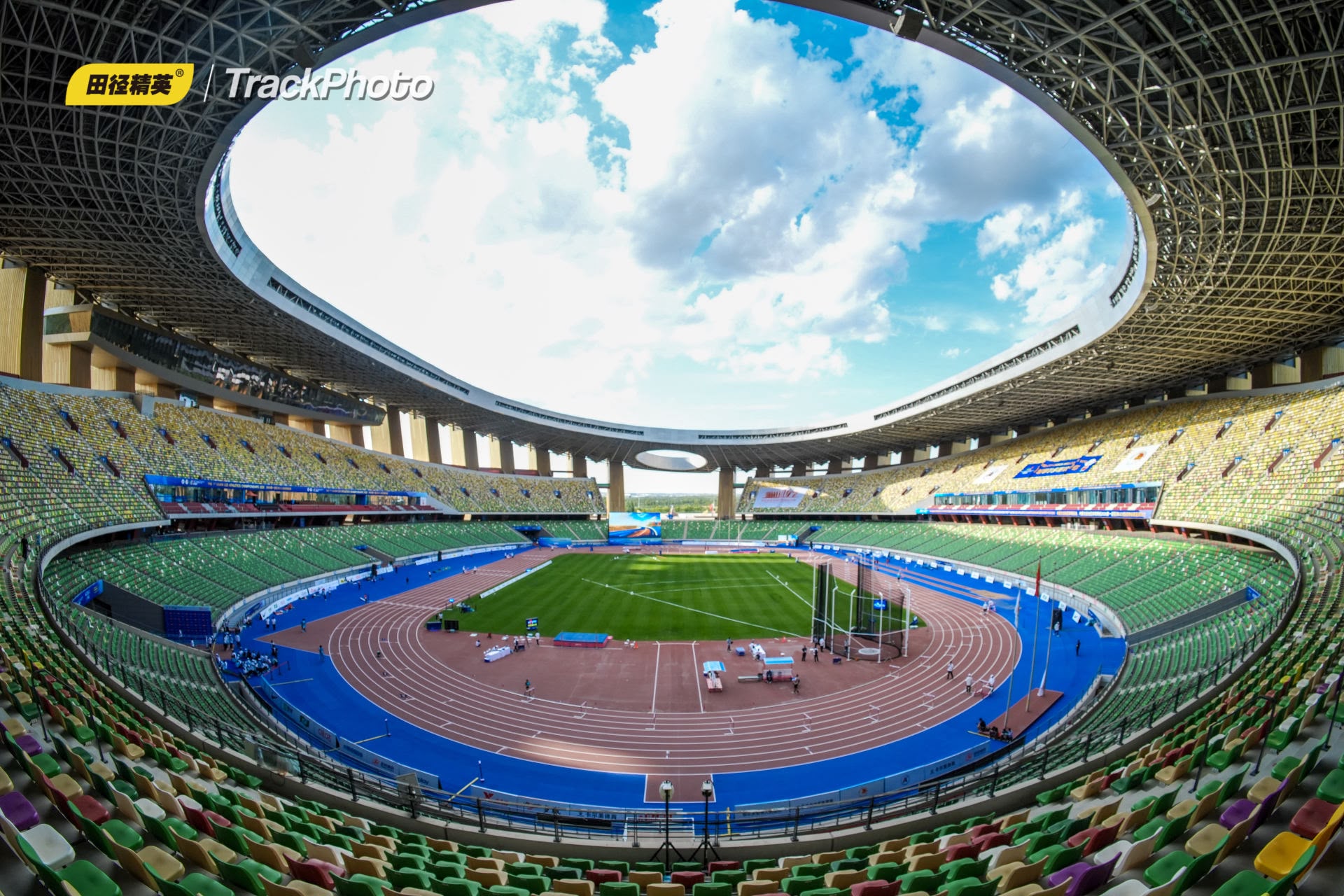
The stadium is ready. The city, glowing under its summer sky, is ready. Over the coming days, this space will bring you every heat, every final, and every story that unfolds on the Ordos track — starting with the Opening Ceremony and the first morning of competition.
For now, it's enough to say: welcome to Ordos. City and championship look set to suit each other very well indeed.
— Asian Athletics Media Delegation, Ordos, China.
Nariman Karabalin


Comments are closed.