Asian women marching ahead on the global stage!
March 8 is celebrated each year as International Women's Day! On this occasion, women in various fields have been honoured for their sacrifices and achievements. The Asian Athletics is taking the opportunity to remember the great names in the continent and revisits their exploits in the sporting arena.
Japan was a forerunner in promoting women's sport, starting competitions for ladies as early as 1925. The following year, a Japanese delegation took part in the World Women's Games in Gothenburg, Sweden.

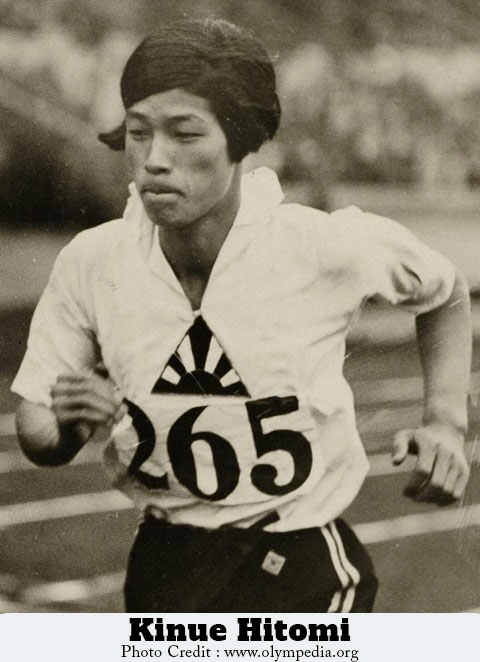
The indomitable Kinue Hitomi emerged as a star of the Games by garnering 2 gold, 1 silver and 1 bronze medals. Her gold medals came in the standing (2.49m) and running (5.50m) long jumps, which opened Asia's glorious account on the global sporting scene. She retained the (running) long jump title by adding a superb 40 cm to her previous mark four years later in Prague, where she also won a silver medal in Pentathlon and two bronze medals in 60m and javelin throw. This versatile athlete also competed in the first-ever women's events at the 1928 Olympic Games in Amsterdam, where she won a silver medal in the 800m with a time of 2 minutes 17.6 seconds.
Women's athletics on the continent received a facelift when Delhi organised the inaugural Asian Games in 1951. Athletes from host India joined hands with the Japanese women in their first major sporting encounter. The women athletes from Southeast Asia, especially those from Malaysia, Singapore and the Philippines, commenced their sojourn through their biennial SEA Games. Athletes from the two Koreas in the East and Iran inthe West were the other countries that fielded women in major sporting events on a regular basis.

The most successful athlete from the Eastern part, however, was Chi Cheng. Hails from Formosa, which is subsequently known as Taiwan and Chinese Taipei, taking advantage of her student days in the United States to show rapid improvement with specialised training under her coach-cum-husband Vince Reel to excel in sprints, hurdles and jumps in the 1970s. An Olympic bronze medalist in 1968 (80m hurdles), Chi Cheng subsequently set world records. In a later life, she served as an administrator of the Republic of China Track and Field Association and also actively participated in the Taiwanese political stage.

Filipino Amelita Alanes became the inaugural Asian Champion when Marikina hosted the continental championships in 1973. Lydia de Vega followed in her footsteps by winning both the Asian Games and Championships titles in the 1980s.

The 1982 Asian Games saw the emergence of Indian women as the trio of P.T. Usha, M.D. Valsamma and Shiny Abraham came under limelight during the New Delhi edition of the quadrennial sporting extravaganza. The list has been growing with Gita Zutshi, Jyotirmoyee Sikdar, and Anju George joining the elite club. Anju, incidentally, became the first Indian woman to win a global medal, a bronze in the long jump, at the 2003 World Championships in Paris.
Japan evolved as a destination for distance running, with women-only marathons organised in cities like Nagoya and Osaka.
The 1990s saw a Chinese revolution with coach Ma Junren's Army of Women Athletes starting to break World Records in every event from 3000m to 10,000m.
Syrian multi-event specialist Ghada Shouaa's global title in 1995 in the heptathlon and Sri Lankan sprinter Susanthika Jayasinghe's Olympic silver in 2000 were testimonials to Asian women forging ahead on the world stage.

Chinese strongwoman Gong Lijiao in the throwing circle and Kazakh triple jumper Olga Rypakova's exploits at the jumping pit made them superstars in their respective events.
With several young women joining the list thanks to the innovative introduction of new competitions for Asian athletes over the years, many more laurels are expected to come Asia's way in the years ahead.
Ram. Muralikrishnan for Asian Athletics
Comments are closed.